
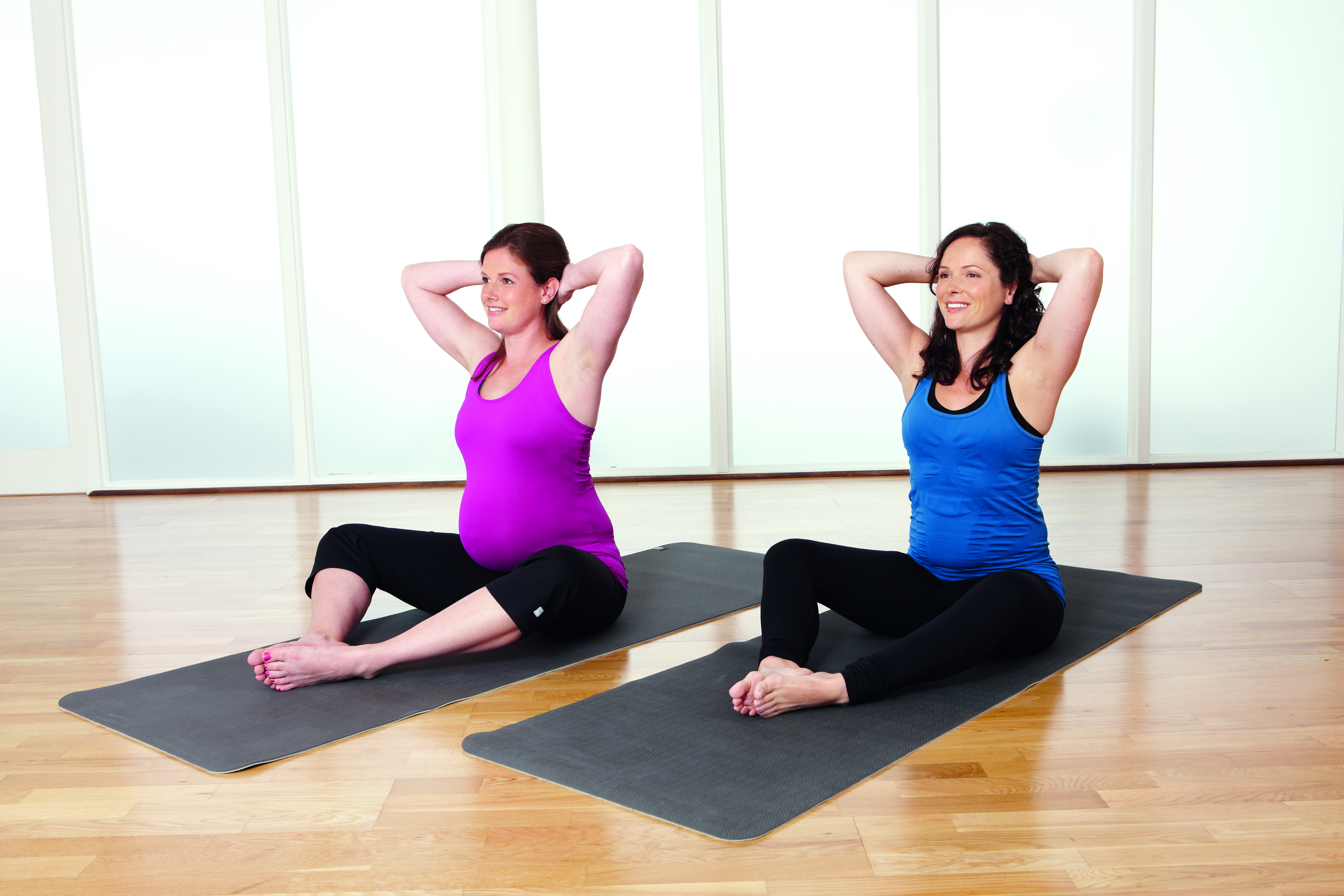
Staying active and eating healthily helps an expecting mum to have a healthier pregnancy, a safer birth and a healthier baby. Exercising improves the stamina and circulation, and tones and strengthens the muscles. Plus, it boosts your mood and energy level.
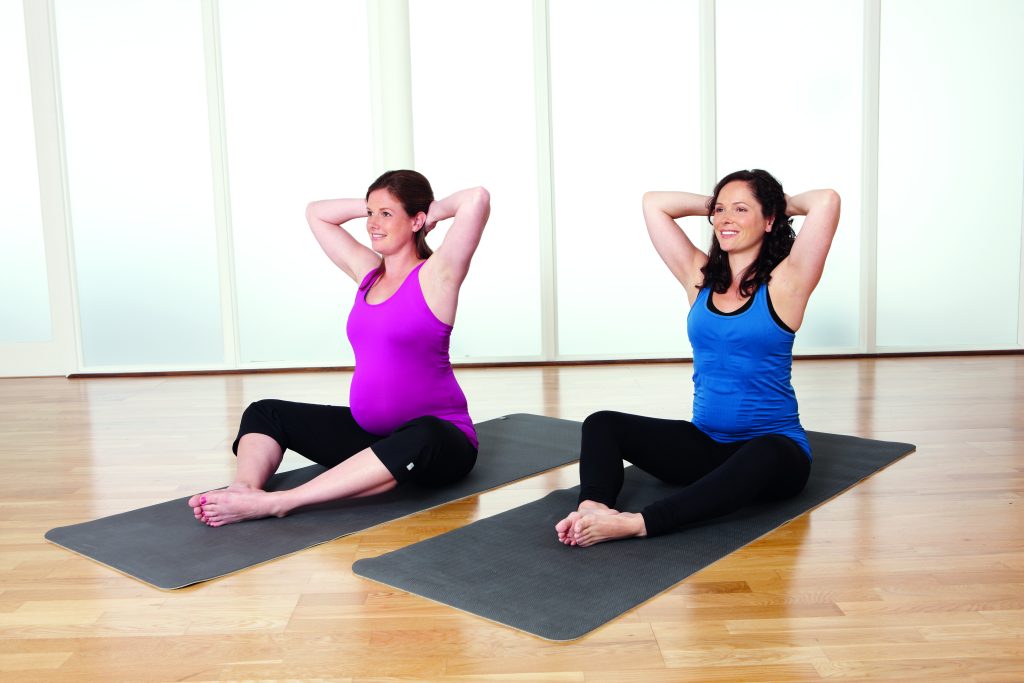
An antenatal Pilates class run by an instructor, qualified to work with ante and postnatal clients, will offer exercises appropriate for pregnancy. Antenatal Pilates offers multiple benefits including, developing your natural corset to support your back and baby, helping with the changes to your posture, pelvic floor education, breathing technique, toning the muscles and, thus, helping in weight management. Practicing Pilates on a regular basis can improve posture, alleviate backaches, and, ultimately, help with labour and delivery. In particular, the latter is achieved through pelvic floor release exercises and exercises that may encourage a baby to rotate into a desired anterior presentation (Pelvic Rocking, Tail Swish etc).
The main changes in the body and their implications for exercising safely are discussed below.
Respiratory system
There is around 15-20% increase in oxygen consumption. The breathing rate will stay the same, but an expecting mum will breathe more deeply each time. The hormonal changes will cause swelling of the capillaries, including those in the lungs and bronchial tubes. These changes together with the changed position of the ribcage and diaphragm may make a mum-to-be feel breathless at times. However, mild breathlessness is common in pregnancy.
Pilates lateral thoracic breathing technique aids in maximising an expecting mum’s breathing. A properly tailored Antenatal Pilates exercise programme helps her keep fit and feel less breathless during pregnancy.
Muscle, ligament, joint and postural adaptations
Hormonal changes during pregnancy have an effect on muscles, ligaments and joints and, thus, cause postural adaptations. Specifically, an increase in oestrogen, progesterone and relaxin affects collagen metabolism and the extensibility of connective tissue. Collagen is found in bone, cartilage, ligaments and tendons. Collagen’s elasticity is increased and its strength is reduced. A decrease of ligamentous strength and an increase in mobility of structures supported by ligaments make joints prone to instability. The pelvis is particularity at risk due to a high number of relaxin receptors. Muscles that are intersected with a fibrous band, e.g. rectus abdominis and pelvic floor are also affected.
Therefore, the stability provided by the musculature surrounding the joints becomes more important. Exercises focused on functional core stability, in particular pelvic stability, are beneficial for a mum-to-be. On the contrary, exercises involving a wide range of movement and long levers, holding positions or stretches and asymmetrical exercises should be avoided.
Pregnancy affects posture and proprioception as the centre of gravity shifts. The posture is likely to be affected from the second trimester, as the baby grows. Some women adopt a posterior posture with a flat lumbar spine and the main weight bearing area being the lumbosacral junction and pelvis. Other women adopt anterior posture with an increased anterior tilt and weight-bearing through the lumbar spine, facets and discs.
The changes in the upper body are likely to manifest through an increase in the thoracic curve, elevation and medial rotation of the shoulders and an increase in the cervical curve. In addition, the ribcage expands and elevates. All these changes make the thoracic area stiffer.
An expecting mum-to be postural changes need to be assessed and re-education of good alignment is required. Appropriate cervical and thoracic extension exercises together with scapular stability exercises are important for the upper body. As the sense of balance is likely to be affected, exercises that improve proprioceptive awareness are also helpful.
Other physical activities
It is advisable to do swimming and walking. Swimming can be done throughout the whole pregnancy, and it is particularly great during the last trimester due to the feeling of weightlessness in the water. Walking is also safe through the pregnancy as long as an expecting mum feels comfortable.
Certain classes and exercises in the gym are not appropriate for pregnancy, for example, there is a risk of putting too much strain on the expecting mum’s joints or muscles. If she intends to continue to go to the gym, she should speak to the instructor qualified to work with antenatal clients to obtain competent advice.
Leave a Reply
You must be logged in to post a comment.